Why Does My Tattoo Itch? Understanding the Healing Process
If you've ever gotten a new tattoo, you've probably experienced that moment when the initial tenderness starts to fade and is replaced by something else:
The itch.
Sometimes it's mild. Sometimes it feels like your tattoo has suddenly become the most interesting patch of skin on your entire body.
Before you start scratching, though, take a breath.
For most people, itching is simply part of the normal tattoo healing process. Your skin is repairing itself, new skin is forming, and the surface is beginning to shed the layers that were affected during the tattooing process.
The hardest part is often leaving it alone.
At Black Swan Tattoo Company, our approach to aftercare has always been pretty simple: support the skin while it heals, and try not to interfere with what your body already knows how to do.
Why Does a Healing Tattoo Itch?
A tattoo involves thousands of tiny punctures to the skin. Once your tattoo is finished, your body immediately begins working to repair the area.
As the skin starts rebuilding itself, several things are happening at once:
The skin barrier is recovering.
New skin cells are developing.
Inflammation is gradually settling down.
The outer layers of skin begin to dry and shed.
The skin can feel tight as it changes.
That combination can create the familiar itching sensation that comes with healing.
It's similar to what happens when other minor skin injuries begin to heal. The sensation can be annoying, but it doesn't necessarily mean that anything is wrong.
In fact, itching often shows up right around the same time you begin seeing peeling and flaking.
The Peeling and Itching Stage
One of the strangest parts of tattoo healing is watching your new tattoo change appearance.
The tattoo may look vibrant when you leave the studio, then become red and tender. A few days later, the skin may feel tight, begin to itch, and start peeling.
The tattoo can even look temporarily dull or cloudy underneath the peeling skin.
Don't panic.
This is a normal part of the healing process for many tattoos.
The surface layer of damaged skin needs to shed as the healthier skin underneath continues to develop. It can be tempting to help that process along by pulling away flakes of skin or scratching an especially itchy spot.
Don't.
Let the skin come off on its own.
Picking, scratching, or peeling at healing skin can unnecessarily irritate the area and may interfere with an even healing process.
What Should You Do When Your Tattoo Itches?
The first rule is probably the hardest one:
Don't scratch it.
Instead, concentrate on keeping the area clean and appropriately moisturized.
If your tattoo feels dry, tight, or uncomfortable, a small amount of aftercare can help keep the skin feeling more comfortable.
But this is where we see another common mistake:
Don't try to fix the itch by applying more and more product.
Your tattoo does not need to be covered in a thick layer of balm all day.
The goal is light hydration—not saturation.
A thin, even layer (pea sized amount) is generally enough. If your tattoo looks greasy, feels sticky, or stays heavily coated, you've probably applied more than you need.
More moisture isn't necessarily better healing.
Why We Believe in Less Is More
There's a tendency in skincare to assume that if something feels dry, adding more product must be the answer.
With a healing tattoo, we prefer a more balanced approach.
Your skin needs moisture, but it also needs the ability to regulate itself as it repairs its natural barrier.
That's one reason our aftercare philosophy focuses on lightweight, intentional application rather than covering a tattoo in heavy layers of ointment.
We don't believe you need to constantly interfere with the healing process.
Clean it. Moisturize it appropriately. Leave it alone.
Sometimes the best thing you can do for a healing tattoo is simply stop messing with it.
Where Black Swan Aftercare Fits In
Our aftercare products were developed from more than twenty years of experience working with tattooed skin.
Rather than creating complicated routines with a long list of unnecessary ingredients, we focused on simple formulas made with carefully selected, naturally sourced ingredients.
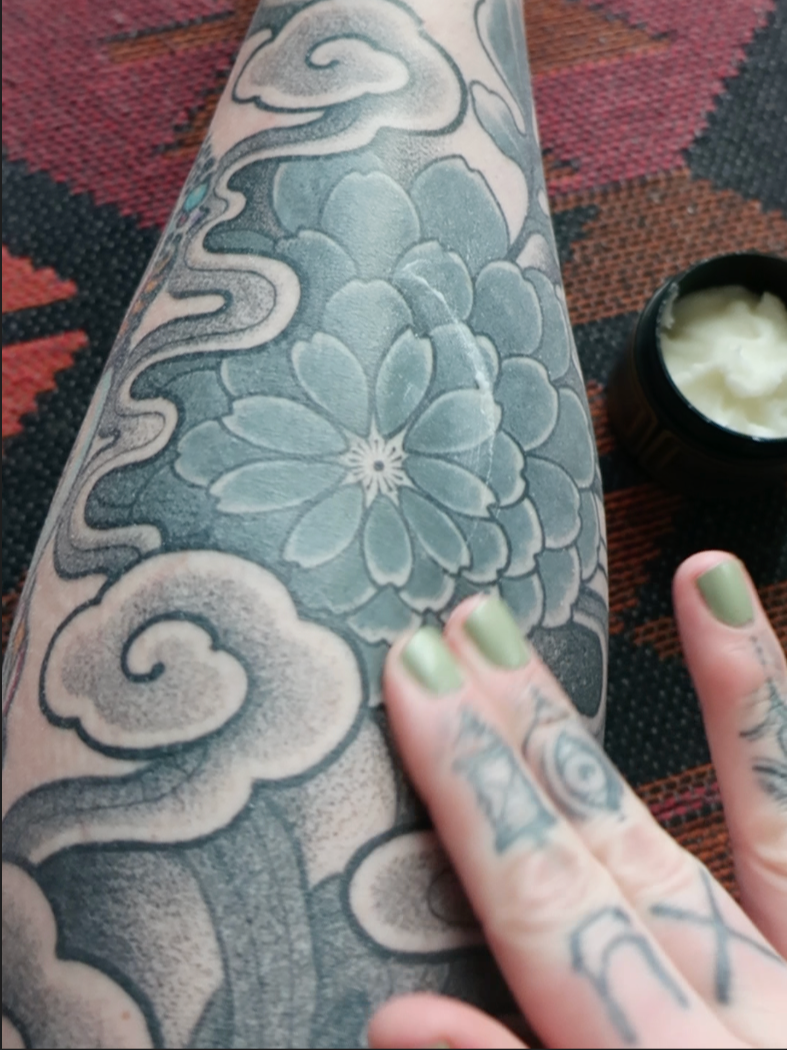
Healing Balm
Our Healing Balm is the thicker of our two moisturizing products and is particularly useful during the earlier stage of healing.
Apply a small amount to clean, dry skin and work it gently into the tattoo. You want enough to leave the skin feeling comfortable and hydrated without leaving a heavy coating.
The Balm can also be useful for areas of particularly dry or sensitive skin that need a little extra attention.
Soothing Salve
As the tattoo moves further into the healing process, many people prefer the lighter feel of our Soothing Salve.
It's designed for everyday hydration and can help relieve that dry, tight feeling that often accompanies peeling and later-stage healing.
It's also useful beyond the initial healing period. Once your tattoo is fully healed, keeping the skin moisturized can help your artwork continue looking its best.
Cream Cleanser
Keeping a tattoo clean doesn't mean stripping the skin.
Our Cream Cleanser was created as a gentle option for cleansing a new tattoo while helping avoid the tight, dried-out feeling that can come from harsher soaps.
Clean skin is an important part of responsible tattoo aftercare, but there's no need to scrub, exfoliate, or repeatedly wash the area.
Gentle is enough.
What About Scratching Through Clothing?
This can be one of the more frustrating parts.
Sometimes your tattoo isn't even directly accessible, but the itch seems to find a way through your shirt anyway.
Try to avoid rubbing the area against clothing or scratching through the fabric. Loose, comfortable clothing can help reduce unnecessary friction while your tattoo is healing.
And if you're someone who tends to scratch unconsciously while sleeping, keeping your nails trimmed can make an accidental nighttime scratch less damaging.
The less mechanical irritation you can give the area, the better.
When Is Itching NOT Normal?
Most tattoo healing involves some combination of tenderness, dryness, peeling, and itching.
However, not every change in a tattoo should automatically be dismissed as "normal healing."
If you notice symptoms that concern you—particularly worsening pain, significant swelling, spreading redness, unusual warmth, drainage, pus, fever, or other signs of possible infection—don't try to treat the problem by simply applying more aftercare.
Contact your healthcare provider for appropriate medical advice.
Your tattoo artist can give you guidance about normal healing, but they aren't a substitute for medical care when something appears to be going wrong.
How Long Will the Itching Last?
There's no exact schedule that applies to every tattoo.
Many people notice itching beginning within the first several days, often around the same time that peeling starts. The sensation generally becomes less noticeable as the surface of the skin finishes healing.
Larger tattoos, heavily saturated areas, and tattoos in areas that experience a lot of movement or friction may take longer to settle.
Try not to judge your tattoo's progress by someone else's timeline.
Your skin is your skin, and healing isn't a race.
The Best Tattoo Aftercare Is Often the Simplest
It's easy to become obsessed with a new tattoo.
You look at it constantly.
You check the color.
You inspect every little flake of skin.
You wonder if it's healing correctly.
Then it starts itching, and suddenly you want to do something about it.
But tattoo healing doesn't require constant intervention.
Your body is already doing most of the work.
Our job is to keep the area clean, provide appropriate moisture, avoid unnecessary irritation, and give the skin enough time to finish what it started.
That's the philosophy behind Black Swan Tattoo Care.
We created these products because after more than two decades of tattooing, we wanted aftercare that reflected the same approach we bring to our work in the studio: simple, intentional, and focused on doing what is actually necessary—not simply doing more.
So when that new tattoo starts itching, remember:
Don't scratch it.
Keep it clean.
Use a thin layer of appropriate aftercare when the skin needs it.
And then let your body do what it was designed to do.
Sometimes the best tattoo aftercare is knowing when to leave your tattoo alone.